
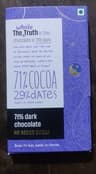
The Whole Truth 71% Dark Chocolate
OFFThe Whole Truth · 10g
Nutrition Facts
* % Daily Values based on 2,000 kcal diet. Tap any nutrient for details. Source: Product label · Values may vary.
Portion Guide
| Portion | Cal | Fat | Sugar |
|---|---|---|---|
| Small serving(25g) | 149.2 | 11.2g | 5.4g |
| Regular serving(50g) | 298.3 | 22.4g | 10.8g |
| Large serving(100g) | 596.6 | 44.8g | 21.6g |
Ingredients
cocoa(cocoa nibs (51%), cocoa butter (20%)), date powder(29%)
Decoded
BEST AS A TREAT
Key Number
Big portion of daily saturated fat allowance.
NOVA 4
Ultra-Processed Foods
Industrial formulations with little to no whole foods, containing additives.
Real Talk
- →One can = 7-10 teaspoons of sugar. Save for parties only.
- →Sugar adds up fast. Balance with unsweetened drinks.
Alternatives
- Nimbu pani – refreshing, natural, low sugar
- Chaas / buttermilk – cooling, probiotic, traditional
- Coconut water – natural electrolytes, no added sugar
ELI5
Snack / TreatWhat is this?
Confectionery made from cocoa, sugar, and fat.
Typical portion?
~200ml glass. Label shows per 100ml.
Per 200 ml glass
1193 kcal, 43g sugar
Is that a lot?
43g is 172% of the WHO guideline of 25g free sugar per day. That is a significant portion from just one serving.
Top ingredients
cocoa (by weight)
NOVA 3
processed food with a few added ingredients
Usage
Best enjoyed as an occasional treat, not an everyday habit.
Treats are part of life. Enjoy them occasionally without guilt, not daily.
Disclaimer: Nutribaba provides general nutrition information for awareness only. It is not medical or dietary advice. Data sourced from product labels and relevant regulatory sources. Data may vary by batch, region, or formulation—always check actual packaging or consult a qualified professional. This assessment does not replace FSSAI labelling requirements or medical advice.