
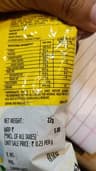
Balaji Farali Chivda
OFFBalaji Namkeen · 22g
Thresholds per FSSAI's 2018 proposed FOPL guidelines
Nutrition Facts
* % Daily Values based on 2,000 kcal diet. Tap any nutrient for details. Source: Product label · Values may vary.
Portion Guide
| Portion | Cal | Fat | Sugar |
|---|---|---|---|
| Small serving(25g) | 147.3 | 9.7g | 2g |
| Regular serving(50g) | 294.5 | 19.4g | 4g |
| Large serving(100g) | 589 | 38.9g | 8g |
Ingredients
POTATO (75%) ROASTED PEANUT (12%), EDIBLE VEGETABLE OIL, SUGAR, ROCK SALT, SPICES & CONDIMENTS (CHILLI, TURMERIC, DRY MANGO, CLOVE, CAROM SEED, CARDAMOM NUTMEG, MACE, BAY LEAVES).
Decoded
FINE OCCASIONALLY
Key Number
Big portion of daily saturated fat allowance.
NOVA 3
Processed Foods
Foods made by adding salt, oil, sugar, or other ingredients to whole foods. Includes canning, bottling, and fermentation.
Real Talk
- →Occasional consumption is fine. Don't make it daily.
- →Heavy on fats. Keep portions small and eat light later.
ELI5
Snack / TreatWhat is this?
A packaged food product.
Typical portion?
~50g. Label shows per 100g.
Per 50g portion
295 kcal, 4g sugar
Is that a lot?
4g is 16% of the WHO guideline of 25g free sugar per day. That is a small amount.
Top ingredients
POTATO (by weight)
NOVA 3
processed food with a few added ingredients
Usage
Best enjoyed as an occasional treat, not an everyday habit.
Treats are part of life. Enjoy them occasionally without guilt, not daily.
Disclaimer: Nutribaba provides general nutrition information for awareness only. It is not medical or dietary advice. Data sourced from product labels and relevant regulatory sources. Data may vary by batch, region, or formulation—always check actual packaging or consult a qualified professional. This assessment does not replace FSSAI labelling requirements or medical advice.